Managing account issues on Facebook and Instagram has long been a point of friction for users, particularly when it comes to recovery and support. Access to direct help has often been limited, and resolving problems could involve lengthy delays or unclear guidance. In response, Meta has introduced a new wave of updates designed to simplify the support experience, improve account security, and offer more reliable recovery tools.
The changes centre around a new, centralised support hub, along with AI-powered tools that aim to make assistance faster and more accessible. While not a substitute for one-to-one human support, these updates represent a shift towards scalable, automated help that’s available when users need it.
Centralised Support in One Place
A key part of the update is the launch of a centralised support hub across both Facebook and Instagram. This hub brings together key tools in a single interface, helping users to:
-
Report and track account issues
-
Find answers through AI-powered search
-
View the status of current concerns
The streamlined layout is designed to reduce the time and effort involved in getting help. Previously, support options were spread across different sections of the apps, making them hard to locate. The new hub aims to address this by offering a consistent support experience across platforms and devices.
Meta is also trialling an AI support assistant, currently being tested on Facebook. This tool offers real-time, automated assistance for common tasks such as recovering access, updating account settings, and managing profile information. The company has indicated it may expand this feature to other apps over time.
Smarter Security Backed by AI
Meta’s AI-driven security systems have been updated to provide stronger protection against account threats. The platform now uses real-time behavioural signals to identify and block unauthorised access attempts, such as phishing and suspicious logins.
The company reports that these systems have contributed to a noticeable drop in account hacks on both Facebook and Instagram. In parallel, Meta has improved the accuracy of its content enforcement tools, leading to fewer accounts being mistakenly disabled. For those that are, the appeals process is now supported by AI, with shorter resolution times for eligible cases.
These behind-the-scenes improvements are part of a wider focus on prevention, aiming to reduce the volume of users needing to rely on recovery tools in the first place.
Easier, More Reliable Account Recovery
When issues do arise, recovery has been another major challenge. Meta’s updated recovery process uses AI to adapt based on the user’s specific situation, offering clearer, more relevant options. Key changes include:
-
Improved guidance at key decision points
-
More detailed alerts around risky activity
-
Enhanced recognition of trusted devices and familiar locations
-
Optional selfie video verification to support identity confirmation
These updates are designed to reduce friction and offer a more tailored path to account access. Meta notes that the success rate of hacked account recovery has increased significantly in markets where the updates have been introduced.
Security Tools to Support Users
Alongside automated protection and recovery tools, Meta continues to promote a number of features designed to help users secure their accounts directly:
-
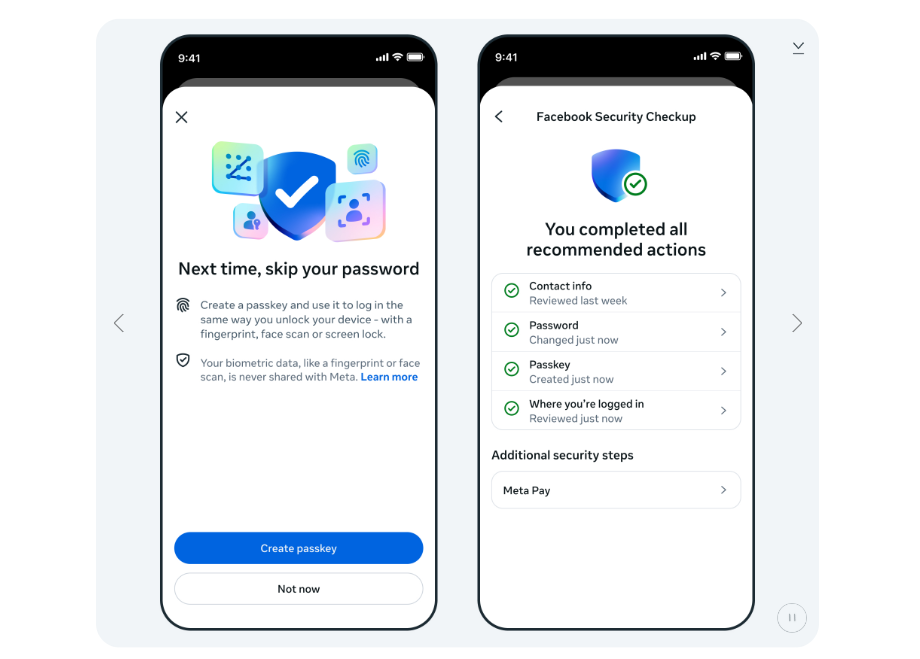
Security Checkup: A refreshed tool that helps users identify and fix common security issues
-
Two-Factor Authentication (2FA): Strongly recommended for all accounts, with support for SMS and authentication apps
-
Passkeys: Login via fingerprint, facial recognition, or device PIN, introduced earlier in 2025
These tools are available across both Facebook and Instagram and are suitable for both personal and business accounts.
Considerations for Teams
For digital marketing teams and account managers, the ability to resolve issues quickly is critical. Lost access, hacked accounts, or enforcement errors can result in downtime, lost content, or disruption to campaigns. These updates may not remove all friction, but they do improve the baseline level of support and provide more visibility into the status of any issues.
The support hub’s reporting and tracking features may also make it easier to monitor account status and resolve problems without escalation. For marketers managing multiple profiles or client assets, this could help streamline issue resolution and reduce reliance on external contacts.
Looking Ahead
Meta’s updates reflect a broader shift in how AI is shaping platform interactions. Beyond support, AI is increasingly set to influence how content is created, campaigns are managed, and brand engagement is scaled. From automated asset generation to guided media planning, AI will play a larger role across the marketing workflow.
As platform capabilities evolve, marketers will need to adapt, not just to new tools, but to a new model of working, where AI intermediates more of the end-to-end process.



RECOMMENDED FOR YOU
Meta Taps Publishers to Power AI Outputs
Meta has re-entered the news licensing space with a…
Meta has re-entered the news licensing space with a…
LinkedIn Boosts Brand Ads With AI Tools
LinkedIn is expanding its advertising capabilities with a new…
LinkedIn is expanding its advertising capabilities with a new…
Meta Adds New AI Tools To Supercharge Lead Gen
Meta is rolling out a wave of updates to…
Meta is rolling out a wave of updates to…