Meta has launched Muse Image, its first image generation model developed by Meta Superintelligence Labs, with plans to bring the technology into Advantage+ creative for advertisers.
Muse is initially available through Meta AI and parts of Instagram and WhatsApp. Users can generate images from prompts, combine reference photos and edit them by sketching changes directly onto an image. Meta says the model will begin powering image generation within Advantage+ creative in the coming weeks.
Advertisers have good reason to approach the rollout cautiously.
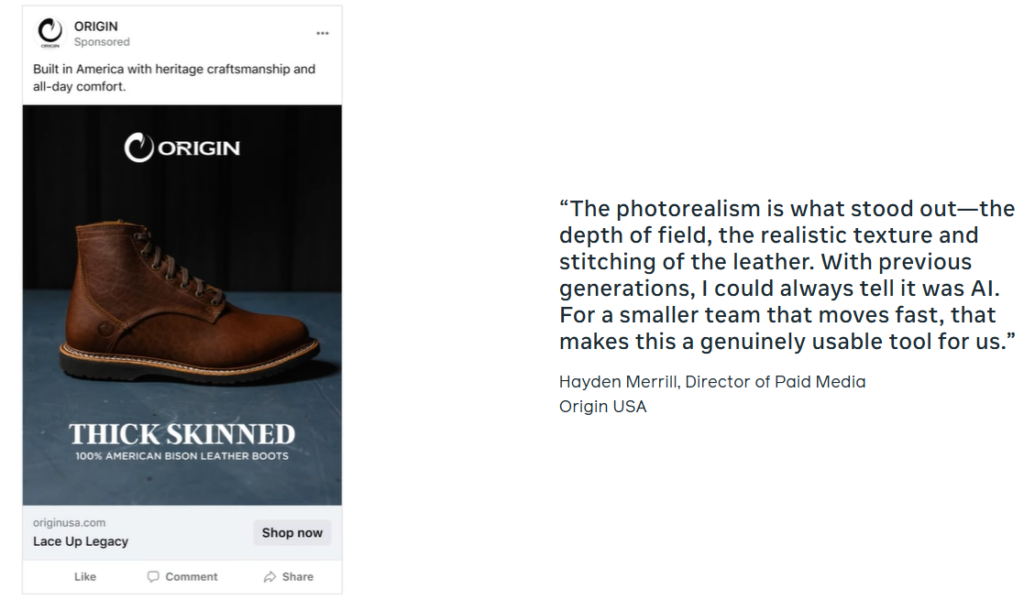
Meta’s existing Advantage+ creative tools can generate backgrounds, resize assets, alter formats, rewrite text and produce variations for different audiences. In practice, the experience has often been less polished than the product pitch.
Brands and agencies have reported distorted products, unsuitable visual additions, altered messages and creative treatments that bear little resemblance to the original asset. Even the basic controls surrounding those features have become a source of frustration.
Campaign managers can find themselves playing whack-a-mole with Advantage+ creative settings, switching off unwanted enhancements only to discover that Meta has turned them back on, introduced another default or applied similar automation elsewhere in the campaign setup.
The problem is not limited to occasional poor output. Advertisers are also losing confidence that their choices will remain in place.
Muse therefore arrives with more to prove than whether it can produce an impressive image.
A stronger model could improve the quality of Meta’s creative tools. It could also expand the number and complexity of changes advertisers need to monitor unless Meta improves the controls, transparency and reliability surrounding them.
Creative production is being pulled closer to the media machinery before many advertisers are comfortable with the machinery already in place.
Muse Could Improve A Patchy Creative Product
Meta’s current generative tools have often been more useful for basic adaptation than serious creative development.
Background expansion, resizing and simple variations can save time when they work as intended. Problems emerge when the platform alters a product, changes the meaning of an image or applies an enhancement that weakens the original creative idea.
Muse is likely intended to improve that experience.
Owning the underlying model should give Meta greater control over image quality, editing and consistency. The company can also connect generation more closely with its recommendation systems, campaign data and advertising products.
A better model, however, will not automatically fix a frustrating product experience.
Image quality is only part of the problem. Advertisers also need settings that remain switched off, clear visibility into what Meta has changed and confidence that automation will not quietly override campaign decisions.
Without those improvements, Muse risks becoming a more capable engine inside a system advertisers already struggle to control.
Meta Is Building More Of The Advertising Stack
Muse also gives Meta greater ownership of the technology behind its advertising creative tools.
The company already automates significant parts of campaign setup, targeting, bidding, placements and delivery. Creative generation is the next logical step.
A brand could provide product imagery and a campaign brief, generate several visual treatments, adapt them across placements and pass those assets directly into Meta’s delivery system. Campaign performance could then determine which versions receive more distribution.
The process becomes faster and more integrated. Meta also gains a larger role in deciding how the advertising is created, tested and served.
Smaller advertisers may gain access to production capabilities they could not previously afford. Larger brands may be able to create adaptations across product ranges, markets and promotional cycles more quickly.
Greater integration also creates deeper platform dependence.
Advertisers may become increasingly reliant on Meta to generate the creative, distribute it, optimise it and explain the results. Less of the advertising process remains visible or portable outside the platform.
More Assets Do Not Mean More Ideas
Meta’s advertising system increasingly rewards creative volume.
As manual audience controls have reduced, advertisers have been encouraged to provide more assets so Meta can test different combinations of imagery, copy, formats and placements.
Muse will make that volume easier to produce.
A campaign could move from a handful of manually designed assets to dozens of generated variations without requiring a corresponding increase in production resources. Meta’s systems can then match those variations with different users and optimise delivery around the apparent winners.
Volume can easily be mistaken for variety, however.
Twenty versions of the same weak idea remain one weak idea. Changing a crop, background or headline does not necessarily create a meaningfully different proposition.
Generative tools can help execute an idea quickly. They are less reliable at determining which customer tension, product benefit or creative direction deserves attention.
Meta can produce more of the advertising. The advertiser still needs to decide what is worth saying.
Advantage Plus Is Becoming A Creative System
Advantage+ was originally associated mainly with media automation.
Creative is becoming a larger part of the system as Meta takes on more decisions across the campaign process. Muse moves Advantage+ closer to becoming a complete creative production and delivery environment.
Meta can help generate the input, produce variations, distribute them and optimise the campaign using its own performance data.
The attraction is obvious. Fewer tools, faster production and a shorter path between making an asset and testing it in market.
The trade-off is reduced visibility.
Advertisers may know which version received more impressions or generated more conversions. They may have less understanding of which creative change affected the result, why Meta selected it or whether the platform’s optimisation aligns with the wider brand strategy.
Meta may identify a winning asset. Marketing teams still need to understand why it won and whether the lesson is useful beyond one campaign.
The Instagram Reversal Exposed The Risk
Meta demonstrated some of the risks surrounding Muse within days of launch.
One feature initially allowed users to generate images referencing public Instagram accounts by mentioning their usernames. Muse could use public images from those accounts when producing new material.
The feature quickly attracted criticism over consent, privacy, impersonation and the potential misuse of people’s likenesses. Meta removed it three days after launch, acknowledging that the feature had missed the mark.
The reversal was swift. The underlying issue is much broader.
Publicly accessible content is not automatically available for any form of synthetic reuse. Someone choosing to share photographs on Instagram has not necessarily agreed to appear in another user’s generated image, much less a commercial campaign.
Meta’s withdrawal suggests product development moved faster than consideration of how the feature could be misused. It also offers advertisers a useful warning.
A platform may make a capability available, but availability is not the same as approval.
Advertisers Cannot Outsource The Judgement
Marketing teams will still need to decide whether a generated use is appropriate, regardless of what Meta technically allows.
Source imagery, likeness rights, consent, product representation and imitation of protected creative work all sit beyond the simple question of whether the platform permits an action.
Meta may remove a feature after criticism. A brand may not get the same opportunity once an ad is live, screenshotted and circulating.
Responsibility will not sit neatly with the platform because the image was generated inside its system. The advertiser approving and publishing the work will still carry much of the legal and reputational risk.
Muse therefore needs to sit within a governed production process, not operate as a shortcut around one.
Generated Work Needs A Better Paper Trail
Governance becomes harder when production happens directly inside the advertising platform.
Muse will make it easier to create, edit and adapt assets without leaving Meta’s environment. That convenience may also make it more difficult to track how an image was produced, what reference material was used and which changes were made.
Generative activity can begin to look like routine campaign optimisation rather than creative production. Prompts, source files, amendments and approvals may disappear into the workflow unless teams deliberately record them.
Organisations should be able to identify what was generated, who created it, which inputs were supplied, what rights apply and who reviewed the finished work.
Different forms of AI assistance may also require different levels of scrutiny. Extending a background is not the same as generating a person, changing a product or fabricating a customer scenario.
Treating every use of AI as one broad category produces a policy that is simple to write and difficult to apply.
Product Accuracy Cannot Be Assumed
Better records help teams understand how an asset was created. They do not guarantee that the result is accurate.
Generated advertising can look polished while still being commercially wrong.
Models may change packaging, colours, proportions, logos, ingredients or functional product details. Backgrounds can introduce settings that imply uses, locations or performance claims the advertiser never intended.
Small errors become more serious when an automated campaign distributes the image at scale before anyone spots the change.
Brands working in financial services, health, property, food, government and other regulated sectors face an even tighter margin for error. The level of accuracy required may sit well beyond what an image model can reliably maintain without close review.
An attractive output is not necessarily an acceptable advertisement.
Faster Production Can Slow Everything Else
Close review takes time, which complicates Meta’s promise of easier and faster production.
Generating assets can be quick. Checking them for visual errors, product accuracy, brand consistency, accessibility, rights issues and misleading implications is not.
Teams may save an hour producing variations and lose several hours reviewing or correcting them.
Existing approval systems may also struggle with the volume. Legal and brand teams cannot manually assess every possible combination if creative output expands without a corresponding change to the review process.
Automation can therefore shift the workload rather than remove it.
The burden moves from making the asset to checking what the system has made.
Human Review Needs Clear Boundaries
More checking alone is not a sustainable answer.
Telling staff to keep a human in the loop sounds sensible, but it does not tell anyone what should be reviewed, by whom or to what standard.
Teams need to define which generated changes are acceptable, which elements must remain untouched and when further approval is required.
A workable policy might permit automated resizing and simple background extension while demanding closer review for generated people, product alterations, claims, testimonials or culturally sensitive imagery.
Ownership also needs to remain explicit. Someone must be accountable for approving the finished output, even when much of the production happens automatically.
Without clear boundaries, different campaign managers will use different prompts, tolerate different risks and apply different standards.
Meta supplies the tool. The operating discipline still has to come from the advertiser.
Advertisers Should Test The Entire Workflow
Muse will be worth testing when it becomes available within Advantage+ creative.
The evaluation should extend well beyond whether the model can produce an attractive image.
Teams should assess whether it preserves product accuracy, follows brand rules, creates genuinely different ideas and reduces total production time once review and correction are included.
The controls around the model deserve equal attention. Advertisers should test whether settings remain in place, whether Meta clearly identifies its changes and whether campaign managers can stop unwanted enhancements from returning.
The strongest result would not be a slightly better image generator. It would be a creative system that is easier to understand, govern and control than the current Advantage+ experience.
Meta is asking advertisers to trust it with a growing share of creative production while many are still struggling to manage the tools already available.
Muse may improve the output. Meta also needs to improve the system around it.



















RECOMMENDED FOR YOU
Canva Expands AI Creative Workflows
Canva has rolled out more than 100 updates across…
Canva has rolled out more than 100 updates across…
Meta AI Pushes Deeper Into Brand Discovery
Meta’s latest AI launch adds another layer to how…
Meta’s latest AI launch adds another layer to how…
ChatGPT Pushes Into Business Intelligence
OpenAI is pushing ChatGPT further into business reporting and…
OpenAI is pushing ChatGPT further into business reporting and…