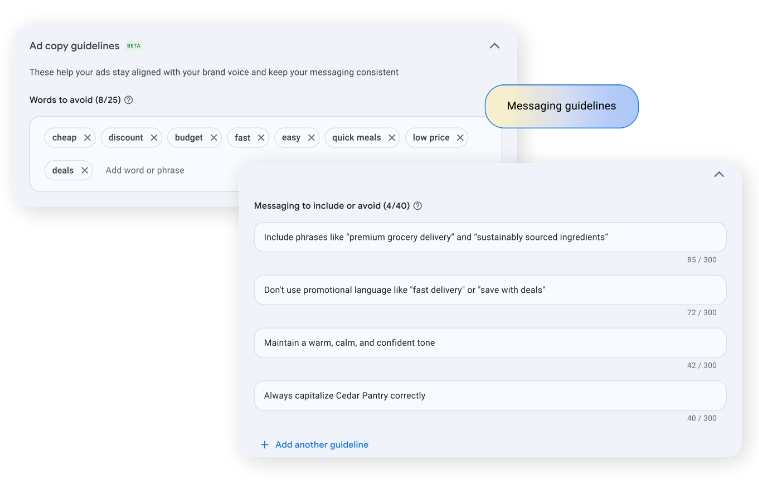
Google is introducing new AI Max reporting capabilities, giving advertisers greater visibility into how its automated Search campaigns select search terms, generate advertising creative and direct visitors to landing pages.
The update comes as Google moves more of its traditional Search advertising functionality into AI Max, encouraging advertisers to adopt automated targeting as AI Overviews and AI Mode become more prominent within Google Search.
For advertisers, the transition presents a commercial trade-off. AI-powered targeting can identify opportunities beyond conventional keyword campaigns, potentially reaching consumers asking longer, more complex questions. However, Google’s systems are also taking greater control over which searches trigger advertisements, what messaging appears and where customers are directed.
Some advertisers have welcomed the additional reach, while others have questioned the impact on campaign costs, targeting precision and their ability to manage advertising activity.
Google’s latest reporting improvements address some of those concerns, although questions remain about how much control advertisers will retain as Search advertising becomes increasingly automated.
Google AI Max Reveals More Search Advertising Detail
Google’s latest announcement introduces a unified reporting interface designed to show advertisers how different elements of an AI Max campaign work together.
The new view will connect three pieces of information:
- Search terms: Which searches triggered an advertisement.
- Creative assets: Which headlines and advertising messages users saw.
- Landing pages: Where Google directed visitors after they clicked.
Advertisers can already access much of this information through existing Google Ads reports, although examining the relationships between search queries, creative and landing pages can require moving between different reporting views.
The new interface is intended to make those connections easier to examine.
For example, an advertiser promoting professional training might discover that Google is reaching searches outside its original keyword list, generating different headlines and directing visitors to specific course pages.
The report could help identify combinations that generate stronger results, alongside instances where automated messaging or landing page selection is poorly aligned with campaign objectives.
Google has yet to announce a general release date for the unified reporting interface, with further details expected later this year.
The additional visibility arrives as Google increases its reliance on automation across Search advertising, including the emerging advertising opportunities associated with AI-generated search results.
Google AI Overviews Push Advertisers Towards Automated Targeting
AI Max is becoming increasingly relevant as Google’s search experience changes.
Traditional Search advertising has relied heavily on advertisers selecting keywords associated with their products or services.
However, users increasingly ask Google more complex questions, particularly through AI Overviews and conversational experiences such as AI Mode.
A consumer might ask how to solve a problem without mentioning a specific product category or brand.
Google’s AI systems can interpret those questions and identify potentially relevant commercial opportunities that conventional keyword lists may overlook.
Advertising can already appear above, below and within eligible AI Overviews, including in Australia.
For advertisements appearing within AI Overviews, Google requires AI-powered targeting capabilities, including broad match or keywordless targeting.
AI Max provides one route through its expanded search term matching capabilities. Eligible Shopping and Performance Max campaigns can also participate.
AI Max itself is not mandatory for advertising within Google’s AI search experiences, although Google’s eligibility requirements increasingly favour automated targeting approaches.
Advertisers using tightly controlled keyword strategies may therefore need to consider broader targeting if they want access to the full range of emerging AI search opportunities.
Google’s systems also use the content of AI Overviews to help determine advertising relevance, extending targeting beyond the original search query.
However, advertisers currently cannot choose to target AI Overview placements exclusively, opt out of those placements or receive separate performance reporting for advertisements appearing within them.
Consequently, the growing availability of AI search advertising does not yet provide advertisers with equivalent visibility into how those placements perform independently of conventional Search advertising.
Google AI Max Automates Targeting, Creative And Landing Pages
AI Max brings several automated Search advertising capabilities together within existing campaigns.
Its functionality includes search term matching, which identifies relevant searches beyond an advertiser’s existing keywords, and text customisation, which can generate or adapt advertising headlines and descriptions.
A third capability, Final URL Expansion, allows Google to select alternative landing pages from an advertiser’s website when its systems identify a potentially more relevant destination.
Together, these capabilities give Google greater influence over several elements of campaign delivery.
A business advertising insurance products, for example, might appear for searches beyond its original keyword list, display AI-generated advertising copy and send visitors to a specialist product page.
The approach could help advertisers capture previously overlooked demand, although the relevance of individual searches, the accuracy of generated messaging and the suitability of selected landing pages still require assessment.
Google provides controls around brands, text and URLs, allowing advertisers to guide or restrict some automated decisions.
The company is also progressively moving established Search advertising functionality into AI Max.
Campaigns using Automatically Created Assets and campaign-level broad match settings began transitioning in September, while the automatic migration of Dynamic Search Ads has been postponed until February 2027 following advertiser feedback.
The migration consolidates several previously separate advertising features within Google’s newer automation framework.
Advertisers retain options to configure individual capabilities, although AI Max is becoming a more central part of Google’s Search advertising environment.
Advertisers Question AI Max Costs And Campaign Control
Google’s expansion of AI Max has received a mixed response from paid search specialists.
The potential to reach additional searches is attractive, particularly as consumer search behaviour becomes more conversational.
However, broader targeting does not necessarily produce more profitable advertising.
Research from Smarter Ecommerce, involving more than 250 AI Max campaigns, found that median revenue increased 13%, while median cost per acquisition rose 16%.
Return on advertising spend varied considerably, with reported outcomes ranging from a 42% increase to a 35% decline.
The findings suggest AI Max can generate additional commercial activity, although the extra revenue may come at a higher acquisition cost.
Google has published more favourable performance figures.
According to its internal research involving non-retail advertisers, campaigns using the full AI Max feature set achieved an average of 7% more conversions or conversion value at a similar CPA or ROAS, compared with campaigns using search term matching alone.
The studies use different samples and comparison methods, so their findings cannot be directly compared.
However, both reinforce the importance of evaluating AI Max against individual campaign objectives rather than assuming that broader automation will consistently improve results.
Advertisers have also raised concerns about the loss of granular controls, particularly as Google transitions away from older campaign configurations such as Dynamic Search Ads.
Automated targeting can reach searches that advertisers did not explicitly select, while generated creative and alternative landing pages introduce additional variables into campaign delivery.
These considerations are particularly relevant for businesses with strict brand guidelines, complex product offerings or regulatory obligations.
Google has responded by introducing additional controls and reporting capabilities, although advertisers remain dependent on its systems for an increasing proportion of campaign decisions.
Google Ads Transparency Still Has Significant Gaps
Google’s new unified reporting interface should make AI Max performance easier to examine, although several limitations remain.
Search term reporting does not necessarily disclose every query that triggers an advertisement, with some searches aggregated or excluded from detailed reporting.
Advertisers also need to review AI-generated creative to ensure messaging accurately represents their products, services and brand positioning.
Final URL Expansion can introduce additional complications where Google selects landing pages that appear relevant to a search but are less suitable for the intended customer journey.
Greater reporting transparency may help advertisers identify these issues, although it does not provide the same degree of control as manually selecting every keyword, advertisement and destination.
The lack of separate reporting for AI Overview placements introduces another challenge.
Advertisers can potentially reach consumers within AI-generated search results, yet Google currently combines those results with broader Search advertising performance.
Consequently, assessing whether AI Overview placements generate additional demand, improve conversion performance or simply capture activity that would otherwise have occurred through conventional Search advertisements remains difficult.
Google’s wider Search automation strategy also creates commercial incentives for the company.
Broader targeting allows Google’s advertising systems to identify potential commercial opportunities across searches that advertisers may previously have overlooked.
For advertisers, the question is whether those additional opportunities generate sufficient commercial value to justify the costs and reduced targeting precision.
AI Max Changes How Search Advertising Is Managed
Google’s expansion of AI Max is changing the balance of responsibilities involved in managing Search advertising.
Traditional campaign management has placed considerable emphasis on keyword selection, match types, advertising copy and landing page decisions.
As Google automates more of these activities, advertisers are increasingly responsible for establishing the information, objectives and restrictions guiding its systems.
Accurate conversion measurement, suitable website content and clearly defined commercial goals remain important.
However, campaign management also involves reviewing whether automated decisions align with those objectives.
The new reporting interface should help advertisers understand how search terms, creative and landing pages interact, providing additional information for identifying problems and testing improvements.
Google also offers AI Max experiments that allow advertisers to compare automated capabilities against existing campaign configurations.
Controlled testing remains particularly relevant given the variation in published performance results and the potential differences between industries, campaign types and existing keyword strategies.
For advertisers, the growing prominence of AI Overviews and AI Mode adds another consideration. Access to emerging search opportunities increasingly depends on automated targeting, while detailed measurement of those placements remains limited.
Google’s latest reporting improvements provide additional visibility into AI Max, although they do not resolve every question about campaign control or performance.
As more traditional Search advertising functionality moves into AI Max, advertisers will need to assess whether broader automation delivers incremental commercial results, how those results are measured and where manual intervention remains necessary.















RECOMMENDED FOR YOU
[STUDY] AI Content Production Keeps Accelerating
93% of marketers now use AI to support content…
93% of marketers now use AI to support content…
Meta Launches AI Agent For Businesses
Meta is extending its AI capabilities beyond Facebook, Instagram…
Meta is extending its AI capabilities beyond Facebook, Instagram…
ChatGPT Introduces Visual Advertising
OpenAI is expanding ChatGPT advertising with new visual formats,…
OpenAI is expanding ChatGPT advertising with new visual formats,…