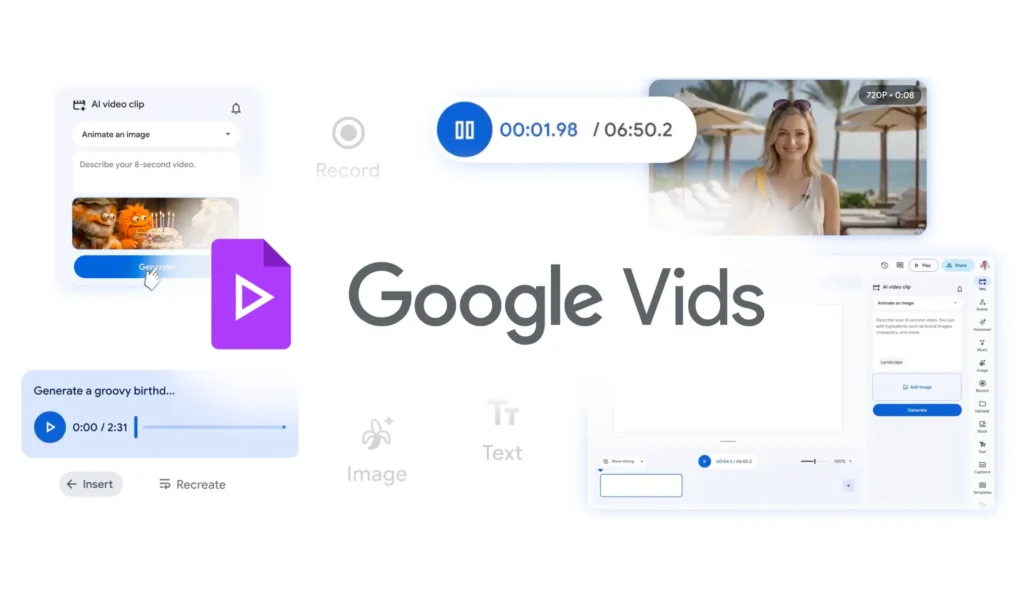
Google is pushing further into AI driven video, upgrading its Vids platform with higher quality generation, built in music tools and customisable avatars. While Vids has flown under the radar compared to Google’s flagship AI products, the direction is now clearer. Google is building for marketers who need to produce more video, more often, without increasing production overhead.
Rather than positioning Vids as a lightweight editing tool, these updates move it closer to a scalable content engine, one that fits directly into day to day marketing and communications workflows, particularly in areas like social where demand for video is constant.
What Is Google Vids
Vids is Google’s browser based video creation platform, built to turn prompts, documents, images and basic inputs into finished video content. It brings scripting, scene creation, editing and asset generation into a single interface, reducing the need for multiple tools or specialist skills.
For marketing and comms teams, that consolidation matters. Campaign videos, internal updates, product explainers and social content can all be produced within the same environment. The benefit is not just speed, but consistency, particularly for organisations managing high volumes of content across channels.
Higher Quality AI Video Generation
A key upgrade sits in video generation quality. Google is now using its Veo 3.1 model to improve visual consistency, motion and realism, addressing one of the main barriers to using AI video in customer facing contexts.
Users can generate clips from simple prompts or static images, making it easier to turn campaign ideas, product messaging or existing content into video formats. For social teams, where the pressure to produce frequent, platform specific video is high, that creates a more efficient way to test formats, respond to trends and maintain a consistent publishing cadence.
Google is also offering 10 free video generations per month to anyone with a Google account, with additional capacity available through paid tiers. That lowers the barrier for teams looking to test video more aggressively without upfront investment.
Built In Music Generation
Audio is often a bottleneck in video production. Google’s built in music generation, powered by Lyria 3, removes the need for external libraries and licensing constraints.
Marketers can create soundtracks that match specific campaign tones or formats, from brand storytelling to product launches. In social video, where audio trends and pacing can influence performance, having faster access to tailored soundtracks can support more reactive and relevant content.
Keeping audio within the same workflow reduces friction, but brand consistency still requires oversight. Without clear guidelines, outputs risk feeling generic.
AI Avatars For Scalable Content
The introduction of AI avatars adds another layer of scalability. These virtual presenters can be customised and reused across videos, making them suited to repeatable formats.
Use cases span product demos, onboarding, FAQ content and localisation. For social video, avatars offer a way to maintain a consistent “face” across frequent posts without the need for ongoing filming, particularly in formats that rely on explanation or commentary.
There are trade offs. In categories where trust is closely tied to real people, avatars may feel impersonal. A selective approach is more effective, using them where efficiency matters most while retaining human presence for higher impact or community driven content.
Workflow And Distribution Updates
Google is tightening the workflow around creation and distribution. A new Chrome extension enables screen recording directly within the browser, which is particularly useful for tutorials, demos and sales content.
Videos can also be published directly to YouTube from within Vids, reducing the gap between production and distribution. For teams running always on strategies, including social video, that supports faster response to trends, performance signals and campaign needs.
Vids Cuts Vid Friction
Vids reflects a broader shift in how video is produced and used. Creation is becoming more distributed across teams, increasing speed but requiring stronger brand guardrails.
For social in particular, where volume and consistency are ongoing challenges, tools like Vids reduce production friction and make it easier to sustain an always on presence. At the same time, as more brands adopt similar approaches, differentiation will rely less on execution and more on creative quality and audience insight.
Lower production costs also make continuous testing more viable, changing how campaigns and social content are optimised over time. Video is becoming a flexible, embedded format across both marketing and communications, rather than a high effort asset used sparingly.

























RECOMMENDED FOR YOU
Google Expands Search Ads Into AI Mode
Google is testing a more controlled route into AI…
Google is testing a more controlled route into AI…
Google’s AI Answers Are Creating Brand Reputation Problems
Google’s AI search products are creating a new reputation…
Google’s AI search products are creating a new reputation…
Google Boosts Reporting AI In GA4 & Google Ads
Google is bringing Gemini much deeper into Google Ads…
Google is bringing Gemini much deeper into Google Ads…