Early ChatGPT ad data suggests conversational AI rewards relevance over persuasion.
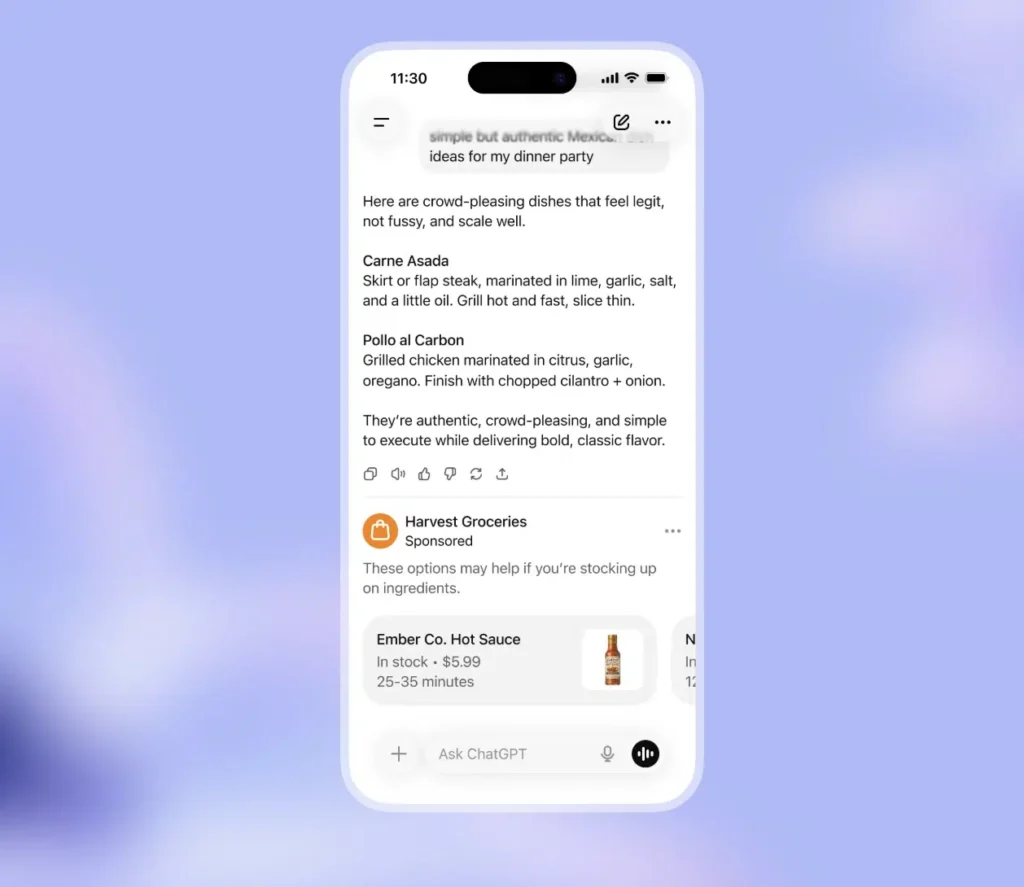
Analysis from Adthena, based on more than 50,000 daily ChatGPT ad placements across 600 advertisers, found that the most common high-visibility ads are short, highly specific and tightly aligned to the user’s original prompt.
Top-performing headlines observed in the study averaged around 30 characters, while body copy typically sat at roughly 19 words. Hard numbers, pricing and measurable offers appeared far more frequently than vague value claims, while aggressive calls to action and hype-led language were notably uncommon.
Adthena does not fully outline its performance methodology, but the recurring creative patterns still offer an early signal of how conversational advertising may evolve.
The findings suggest ads inside conversational AI environments behave less like traditional interruptions and more like useful responses.
Conversational Ads Change The Rules
Traditional paid search is built around visibility and interruption.
Users type fragmented queries, scan multiple links and compare competing results across a search page. The advertiser’s job is to capture attention as quickly as possible.
ChatGPT changes that dynamic.
Users ask detailed, intent-rich questions and continue refining decisions inside a single conversational flow. Ads appear within that interaction rather than alongside a list of search results.
That changes what effective advertising looks like.
The Adthena research found many frequently recurring ChatGPT ads follow a simple “Brand: Benefit” structure, using concise value-led messaging instead of long promotional copy.
Current formats also leave little room for wasted language. Most placements consist of a short headline, brief supporting copy and a destination link.
Every word has to work harder.
Specificity Is Becoming A Competitive Advantage
One of the clearest patterns in the data is how strongly conversational ads reward specificity.
Ads featuring pricing, percentages, APY rates, trial lengths and measurable outcomes appeared consistently across high-visibility placements. The word “free” was also one of the most commonly recurring conversion triggers in the dataset.
That reflects the way users interact with conversational AI.
People are not typing disconnected keywords into ChatGPT. They are asking nuanced questions with clear intent. The ads appearing most frequently mirror that same level of precision in return.
Context appears especially important.
A prompt about marathon training may trigger ads referencing distance progression or race preparation rather than generic sportswear messaging. Financial queries surface highly specific savings rates and credit offers instead of broad awareness campaigns.
That represents a meaningful shift away from traditional keyword-first optimisation.
Google appears to be moving in a similar direction with AI-powered Search. Industry guidance around AI Overviews and AI Mode increasingly points advertisers towards Broad Match, Smart Bidding and AI-driven campaign configurations designed to give Google’s systems more flexibility in matching ads to conversational intent.
That aligns closely with the patterns emerging inside ChatGPT advertising, where contextual relevance appears to matter more than rigid keyword alignment.
What This Means For Marketers
In practical terms, conversational advertising may require more granular creative strategies than traditional paid search.
Rather than relying on a small number of broad campaign messages, brands may need larger volumes of tightly targeted copy aligned to specific user intents and conversational contexts.
That does not necessarily mean producing more complex campaigns. If anything, the opposite may be true.
The recurring ads identified in the research were often structurally simple: short headlines, highly specific offers and direct responses to user needs.
The challenge is less about scale of production and more about precision.
As conversational AI expands, marketers may need creative systems capable of rapidly generating and testing multiple intent-aligned variations rather than relying on a handful of generic evergreen ads.
Hype Appears To Underperform
The research also points towards a notable change in tone.
Many of the frequently recurring ads use restrained, informative language that closely matches the surrounding AI-generated response. Exclamation marks are rare. Generic “Learn More” style CTAs appear far less common than action-led prompts tied directly to a product or offer.
That makes sense inside a conversational environment.
Users are already in research mode by the time an ad appears. Overly sales-driven creative risks feeling disruptive inside an interface designed around assistance and recommendations.
In conversational AI, the strongest ads increasingly sound less like campaigns and more like answers.
Visibility Is Becoming Conversational
The broader implication is not simply a new ad format. It is a change in how brands compete for visibility.
Inside search engines, advertisers compete for rankings and clicks. Inside AI assistants, they increasingly compete for inclusion within recommendations and conversations.
That distinction matters.
If conversational AI becomes a major layer for online discovery, appearing inside those interactions could become strategically important very quickly.
The Adthena analysis also identified examples of brands appearing multiple times within a single ChatGPT response, described as “Double Parked” placements. While still early-stage behaviour, it hints at how conversational share of voice may evolve as advertising inventory expands.
The Rollout Is Expanding
ChatGPT ads are now appearing for at least some logged-in users across the US, Australia, New Zealand and Canada on Free and Go plans, although availability still appears phased depending on session and query type.
The rollout remains early, but the underlying behavioural shift is already becoming clearer.
Users are beginning discovery, comparison and evaluation journeys inside conversational AI interfaces rather than relying solely on traditional search engines.
Paid search is not disappearing. But conversational AI is introducing a new environment where relevance, usefulness and contextual alignment appear to matter more than many traditional advertising instincts.













RECOMMENDED FOR YOU
[STUDY] AI Search Shapes Brand Decisions
AI search is starting to influence purchase decisions well…
AI search is starting to influence purchase decisions well…
LinkedIn Lets AI Multiply Ad Creative
LinkedIn is giving advertisers far more freedom to vary…
LinkedIn is giving advertisers far more freedom to vary…
Copilot Lets Marketers Build Apps By Chatting
Microsoft is giving Copilot users the ability to build…
Microsoft is giving Copilot users the ability to build…